Technology / AI & Machine Learning2 min read
A chat window does not make a product conversational. Listening does. Erika Hall reminds us that conversation is the oldest interface we have.
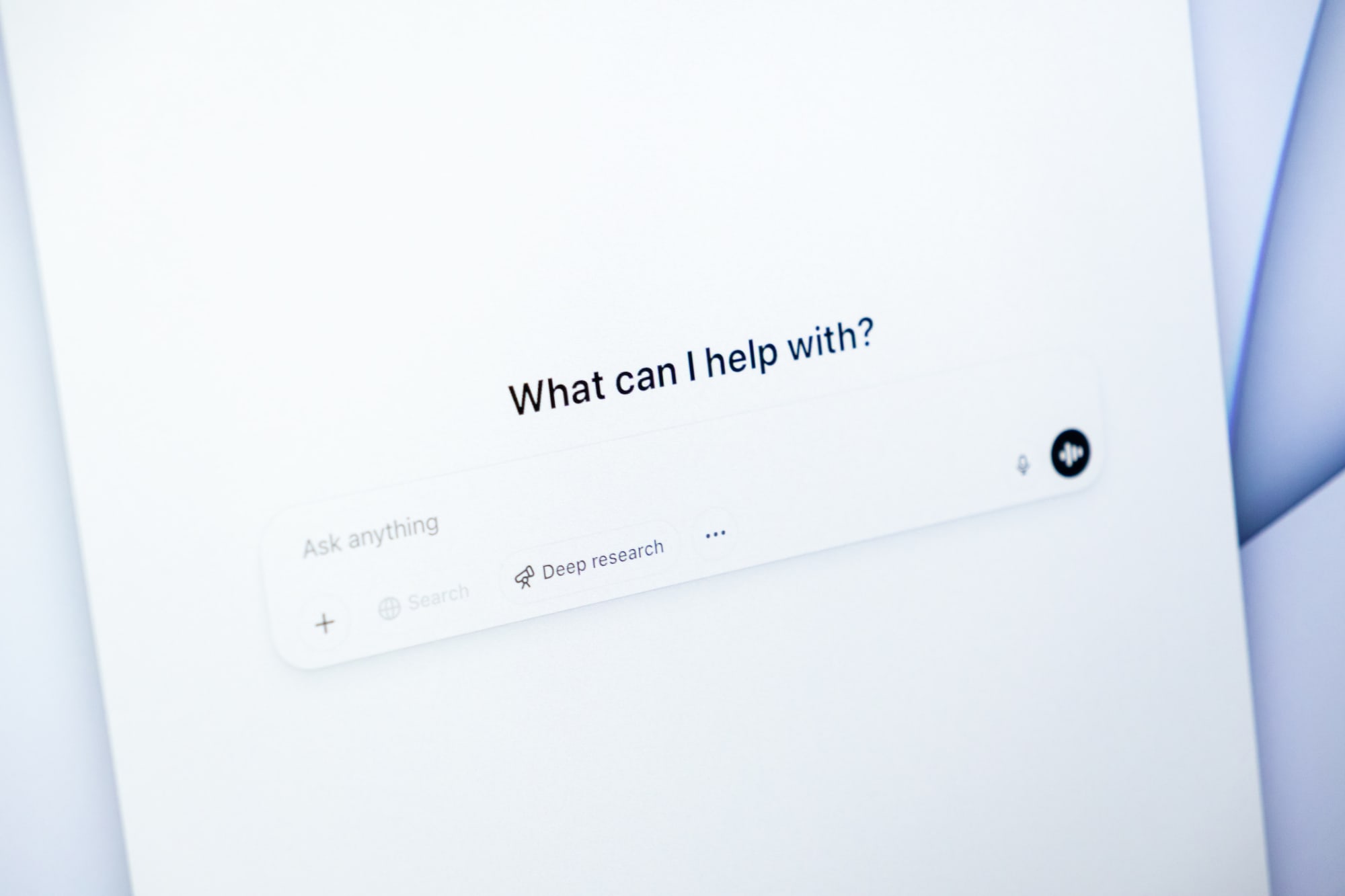
Think about the last time you tried to change a booking through a chatbot. It greets you warmly, offers three buttons that have nothing to do with your problem and then asks you to rephrase. Twice.
It looked like a conversation. It did not feel like one.
That gap is what Erika Hall explores in her book Conversational Design. Her argument is that conversation is not a new interface. It is the oldest one we have. Long before screens, people exchanged information by talking, listening and adjusting to each other. Hall suggests we use human conversation as the model for every digital interaction, not just the ones with a chat window.
She draws on the work of philosopher Paul Grice, whose principles describe what makes a conversation cooperative. Say enough, but not too much. Be truthful. Stay relevant. Be clear.
Those four ideas are a better design brief than most product requirements I have seen.
In an interview with Intercom, Hall made an observation that stayed with me. “We still think screens first.”
Now that language models make it easy to put a chat box on anything, that warning matters more. A chatbot is a format. A conversation is a quality. You can have one without the other.
So what does designing for conversation look like in practice?
First, start with intent. People arrive with a goal. Understand it before you offer options. A conversation that answers the wrong question is still a failure.
Second, respect turn taking. Good conversation partners do not monologue. Keep responses short, then give the person room to respond, clarify or change direction.
Third, remember context. Nothing breaks the feeling of conversation faster than being asked for information you already gave.
Fourth, recover gracefully. Misunderstandings happen between people too. The difference is that people repair them. Offer a clear way back instead of a dead end.
Fifth, choose words with care. As Hall said in the same interview, “Every word really does matter.”
A chat window does not make a product conversational. Listening does.
Stephen Covey captured this perfectly when he wrote, “Most people do not listen with the intent to understand; they listen with the intent to reply.”
Too many chatbots are built exactly that way. Designed to reply, not to understand.
Design conversations, not chatbots. Build systems that listen first, and the replies will start to make sense.